2026-11-27 ·
Signs Your Garage Door Springs Are Wearing Out in Garland
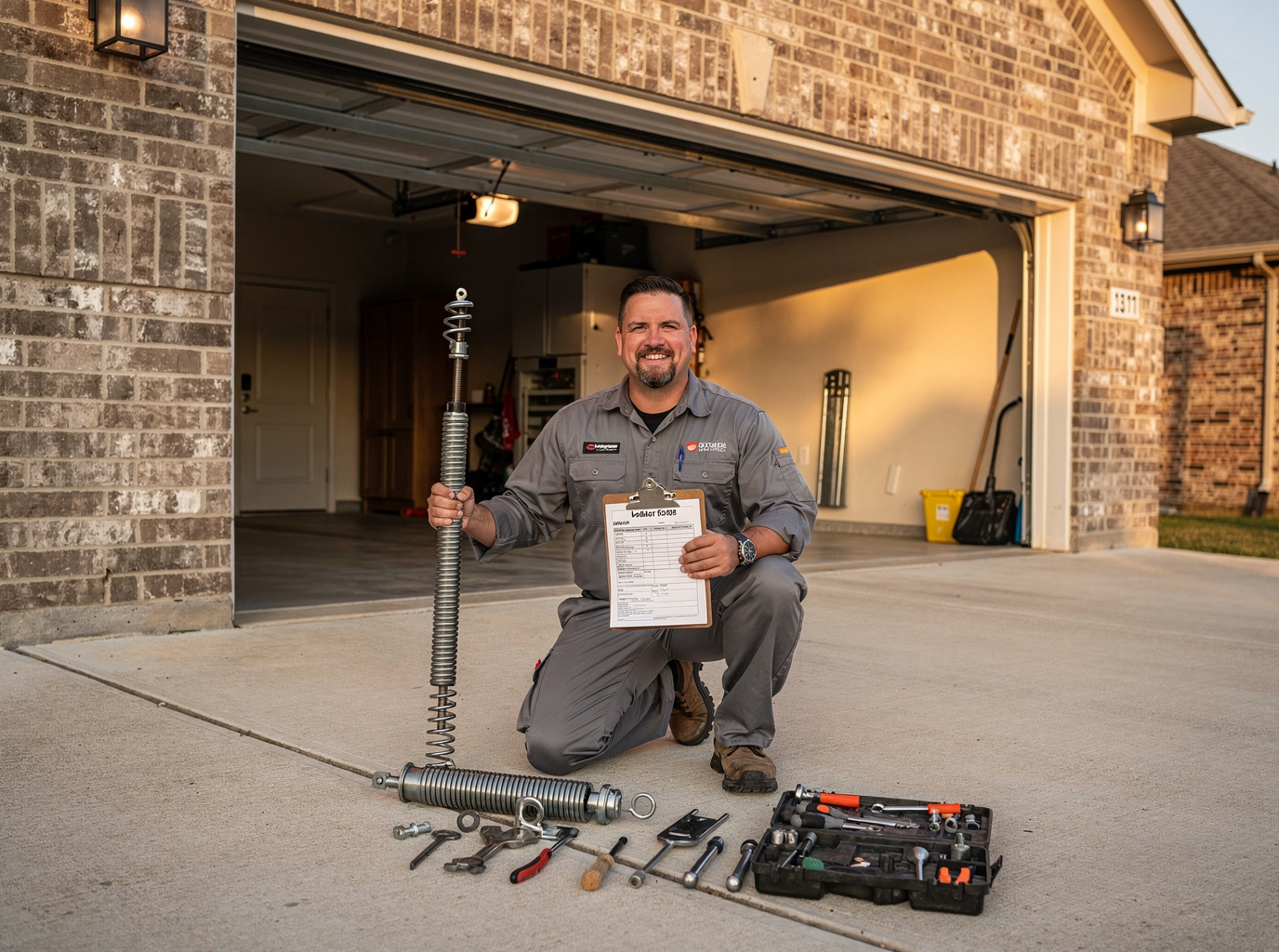
A garage door spring rarely fails without warning. In Garland, summer heat, humidity, and clay soil movement wear springs down over time, and the signs usually show up weeks before the spring actually breaks. Knowing what to look for means you can have the door inspected while the repair is still straightforward, instead of dealing with a door that will not open at all.
A Visible Gap in the Coil
One of the clearest signs of a worn torsion spring is a gap in the coil. Look at the spring mounted on the steel shaft above the door opening. If you can see a clear separation between two coils where the spring has stretched and not returned to its shape, the spring is wearing out. A small gap can grow quickly once the metal starts to fatigue, and a spring with a visible gap should be inspected before it snaps.
Extension springs, which run along the horizontal tracks on each side of the door, show wear differently. Look for stretched coils, a spring that hangs unevenly, or a cable that has gone slack on one side. Any of these means the spring is no longer carrying its share of the door's weight.
Rust and Corrosion
Garland humidity takes a toll on bare steel. Rust on a spring is more than a cosmetic problem. Corrosion thins the metal and creates weak points where the coil can crack under tension. Check the springs for orange or brown patches, especially near the ends and around the winding cones. Surface rust that you can wipe away is one thing, but pitting and flaking mean the spring has been losing metal for a long time and should be looked at.
A Door That Feels Heavy or Lifts Unevenly
If the door feels much heavier when you lift it by hand, or if one side rises faster than the other, the springs are not balancing the door the way they should. A balanced door should stay put when you lift it halfway and let go. A door that drifts down or shoots up is telling you the spring tension is off. This is also hard on the opener, which has to work harder to move a door the springs are no longer helping.
A Loud Bang from the Garage
A sharp bang from the garage, especially in the morning when the door is first used, is often a spring breaking. Sometimes you will find a piece of the broken spring on the garage floor, or you will see that the door will not lift at all. If you hear a loud bang, do not try to force the door open. A broken spring leaves the full weight of the door on the opener and the cables, and forcing it can bend the track or damage the opener.
The Opener Straining
An opener that strains, hesitates, or reverses for no clear reason can be a sign of worn springs. When the springs are weak, the opener has to lift more of the door's weight than it was built for. You might notice the opener sounding louder than usual, the door moving more slowly, or the motor cutting out partway through a cycle. These are all signs that the springs need attention, not just the opener.
A Sagging or Crooked Door
A door that sags on one side, sits crooked in the frame, or leaves a gap at the bottom is often a sign that one spring has weakened more than the other. On a two-spring door, the springs should wear at a similar rate, but if one has been carrying more of the load, the door will start to sit unevenly. A crooked door puts extra strain on the rollers, hinges, and track, so it is worth having looked at before the misalignment causes more damage.
Why Worn Springs Should Not Be Ignored
A worn spring does not get better on its own. As the spring weakens, the opener, cables, and rollers all take on more strain, and a part that could have been replaced on its own can turn into a bigger repair. A spring that breaks while the door is moving can also damage the track, the opener, or the door panels. The safest approach is to have the door inspected as soon as you notice any of the signs above, while the door is still working.
What an Inspection Covers
An inspection looks at the whole door system, not just the springs. We check the spring coils for gaps, rust, and stretching, test the door balance by hand, and look at the cables, drums, rollers, and track alignment. The opener is tested through full open and close cycles, including the safety reversal, so you can see how the door behaves under normal use. The findings are explained in writing before any work begins, and the old parts are shown beside the new ones when a spring is replaced, so you can see exactly what was worn and why.
If you have noticed any of these signs in your Garland garage, have the door looked at before the spring decides the timing for you. For spring repair and replacement, see our spring repair and replacement service.