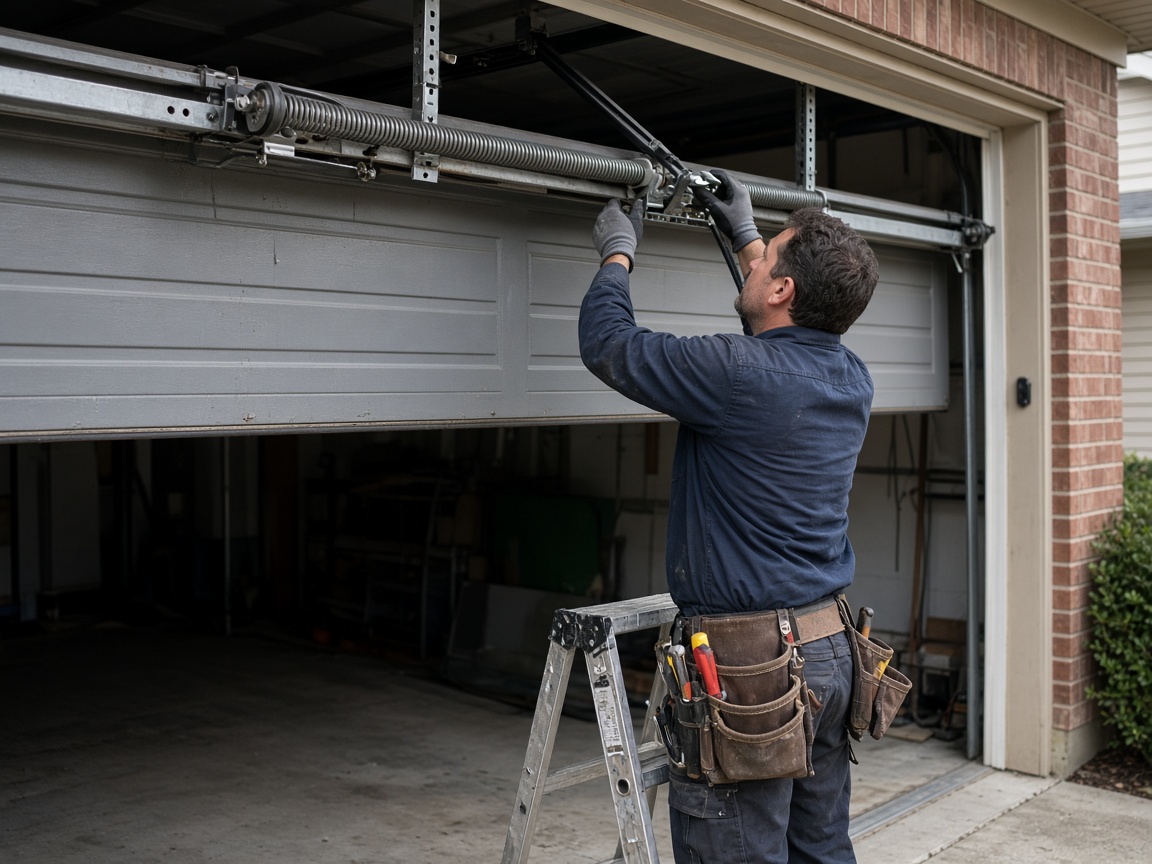
When a garage door stops working in the middle of a Garland weeknight, the first questions are whether the car is trapped and whether anyone can get in and out safely. We treat emergency calls in Garland as a priority from the first conversation. Our technician inspects the door, springs, cables, and opener before recommending anything, and explains what was found in writing before any work begins. You will know what failed, which parts we recommend replacing, and which parts can wait.
Garland sits on the northeast side of Dallas County, a short drive from Lake Ray Hubbard and close to the Firewheel and Downtown Garland corridors. Many of the garages we open up belong to ranch and split-level homes from the 1960s and 1970s that still carry original hardware or early replacements. That history shapes how we work. We inspect the whole system rather than only the part that failed, because a snapped torsion spring often means the cable drums, bearing plates, and track have been under strain for a long time.
Every visit starts with an inspection and a written list of findings. You can see the parts we recommend, the parts that still have life in them, and the reason for each decision. Before any work begins, we walk you through the old components beside the new ones, so you can compare wear, rust, and fatigue yourself. We do not push upgrades you did not ask about, and if a part still has good service left, we say so plainly.
You can judge our work on the finished door. It should run level, hold its balance when lifted halfway by hand, and reverse when a test object is placed on the floor under it. We run each of those checks in front of you before we leave, and we explain what each one means for the door's day-to-day use.
Garland summers push garage doors hard. Garage air can climb well past outdoor temperatures during the afternoon, and steel springs lose temper over thousands of open and close cycles. Once winter temperatures drop and a cold snap settles over North Texas for a few days, metal contracts, and springs that were already near the end of their fatigue life are the ones that give out. The first cold morning or the first long hot week after heavy use is often when a spring finally lets go.
North Texas clay adds its own pressure. Expansive soil swells after heavy spring rain and shrinks during dry late-summer weeks, which can shift a slab or header just enough to throw a door out of its track. A door that sticks or grinds at one corner is often telling you the frame has moved. Continuing to force it can bend the track and damage the opener's trolley, which turns a small adjustment into a larger repair.
Severe weather is another local factor. Hail that rolls through the region can dent panels and bend tracks, and a bent track puts uneven load on the springs. Waiting until the door fails completely usually leads to a bigger job, with more labor and more cleanup than a planned inspection would have needed. Scheduling a check now, before the next storm or the next cold snap, gives you options instead of a locked garage.
Here is how an emergency visit typically runs once we arrive. First, we secure the door so it cannot drop while we work, and we check whether anything in the opening is under tension. Second, we inspect the springs, cables, drums, bearing plates, track, rollers, hinges, and opener, and we note wear, corrosion, and alignment in writing as we go.
Third, we explain our findings before any work starts. You receive a written list describing what failed, what we recommend replacing, and what can wait. Fourth, we walk you through the old parts beside the new ones, showing the wear pattern on a removed spring or cable so the decision is clear. Fifth, we replace only the components you approved, using springs matched to the door's weight, wire size, and inside diameter.
Sixth, we test the door under load. We check balance, confirm the auto-reverse and photo eyes, and verify the opener's travel limits. Last, we hand back any removed parts if you want to keep them, and we review what to watch for in the coming weeks so small changes do not become the next emergency.
A Cold Morning Spring Failure Near Holford
Picture a split-level home on a quiet street near Holford, built in the 1970s, where a two-car garage is carried by a single original torsion spring. On a cold January morning, the spring lets go with a loud crack. The door drops a few inches and stops, one cable pulls loose from its drum, and the opener only groans when the button is pressed. Nobody can get the car out, and the family is running late for school.
The first instinct is to yank the door open by hand. That is the move that does the most damage. A door with a broken spring and a loose cable can slam down or pull a drum off the shaft, and a person standing too close can be hurt. Keep clear of the door, keep children away from the opening, and wait for a technician to secure it before anyone touches the springs.
When we arrive, we first lock the door in place and confirm the spring is broken rather than just stretched. We check the cable on both drums, the shaft, the bearing plates, and the track alignment, because a slammed door often bends the track near the bottom roller. We find the broken spring, a frayed cable on one side, and a cracked bearing plate. Before we start, we explain each item in writing and set the old spring beside the replacement so the winding and wire size are clear to the homeowner.
We replace the spring with a matched torsion pair sized to the door's weight, reset both cables, install a new bearing plate, and test the balance. The door lifts smoothly by hand, stays put halfway, and reverses on contact with the safety test. The car is out before school starts, and the family leaves with a written findings sheet and a clear picture of what changed and why.
Garage Door Repair Details in Garland
Torsion Spring Failures in Garland Homes
Torsion springs sit on a steel shaft above the door and carry most of its weight, so when one breaks, the whole system shifts. In Garland, many homes from the 1960s through the 1990s still run original or early replacement springs, and the usual failure is metal fatigue that lets go during a cold snap or a long hot afternoon. Here is what we check on that kind of call:
- A snapped spring often leaves the door sagging a few inches or stuck partway up, which tells us the load has shifted onto the opener and cables.
- Replacement springs must match the door's weight, cycle rating, wire size, and inside diameter, so we measure rather than assume.
- Springs are usually replaced in pairs, because a new spring beside an old one creates uneven balance and a faster repeat failure.
- Before any work starts, you receive a written findings sheet covering the spring specification, and we show the old spring beside the new one so you can see the wear.
Extension Spring and Cable Issues Near Lake Ray Hubbard
Extension springs run along the horizontal tracks on either side of the door. They are common on older lift systems and on doors installed with basic hardware. Homes closer to Lake Ray Hubbard and on lower-lying streets can see more humidity than upland blocks, and that moisture speeds rust on steel springs and cable ends. What we look for on these calls:
- Stretched or cracked coil ends, which usually mean a spring is near the end of its life even if it has not fully snapped.
- Cable fraying at the drum and pulley, since a loose cable can slip and cause an off-track door.
- Safety cables running through the springs, which should be in place so a broken spring does not whip across the garage.
- A written list of which parts we recommend replacing and why, shown beside the old components so you can judge the wear yourself.
Broken Spring Repair and Safety Checks in Older Garage Doors
A broken spring is a safety issue as well as an inconvenience, because a door can drop quickly once tension is lost. Many Garland garages from the 1970s and 1980s have heavier doors with older panels, and a snapped spring can bend the track or pull a drum off its shaft. Four checks we run on every broken spring call:
- Whether the door can be held in place before we touch anything, using clamps or a bar placed safely.
- Whether the bottom bracket, bearing plates, or drum has cracked from the sudden load.
- Whether the track is still square, because a bent track will bind a new spring and wear rollers quickly.
- Whether the opener's force and limit settings still match the balanced door, with written notes on any change we recommend.
Garland garage doors fail for a handful of predictable reasons, and most of them show warning signs well before the emergency. If the door is making a new grinding noise, pulling to one side, or stopping partway up, schedule an inspection while the damage is still limited. A written findings sheet gives you the facts, and the walk-through of old and new parts lets you decide with confidence rather than in a rush. Once we have explained what we found, you choose what to proceed with.
Frequently Asked Questions About Emergency Garage Door Repair in Garland
Technician insight
In Garland, the thing that catches most people out with Emergency Garage Door Repair is that a door sticking after a hot or cold night is often a frame or track problem, not just a spring. The clay soil here swells with spring rain and shrinks in dry summers, and a header that has moved an inch can make a door bind even when the spring is fine. Before anyone forces the door, have it looked at, because forcing it bends the track and turns a small fix into a bigger one.
A Cracked Torsion Spring on a Cold Garland Morning
A homeowner near Holford found a two-car door stuck a few inches off the floor after a cold snap, with one cable loose from its drum. We secured the door, then found the original torsion spring broken, a frayed cable, and a cracked bearing plate. We explained each item in writing and showed the old spring beside the replacement before starting. The door was balanced, tested for auto-reverse, and back in service before the family needed the car.
Emergency Garage Door Repair Services We Offer
✓Torsion Spring Replacement in Garland
Torsion springs above the door carry most of its weight. When one wears out, we inspect the shaft, cables, and bearing plates, then replace springs in matched pairs sized to your door. You see the old spring beside the new one before work begins.
✓Extension Spring Replacement in Garland
Extension springs run along the horizontal tracks and are common on older lift systems. We check coil ends, cable condition, and safety cables, then explain in writing which springs we recommend replacing and why.
✓Broken Spring Repair in Garland
A snapped spring can drop a door quickly and damage the track, drums, or bearing plates. We secure the door first, check for secondary damage, and explain every finding in writing before we begin the repair.
How it works
- 1
Secure the Door and Inspect
We secure the door so it cannot drop while we work, then inspect springs, cables, drums, bearing plates, track, rollers, hinges, and the opener, noting wear and alignment as we go.
- 2
Explain Findings in Writing
Before any work starts, you receive a written list of what failed, what we recommend replacing, and what can wait. You can review it at your own pace.
- 3
Walk Through Old and New Parts
We show you the removed parts beside the replacements, pointing out the wear pattern, rust, or fatigue so the decision rests on visible evidence.
- 4
Replace Approved Components
We install only the parts you approved, with springs matched to the door's weight, wire size, and inside diameter, and reset cables and bearing plates to the correct tension.
- 5
Test and Hand Off
We check balance, confirm the auto-reverse and photo eyes, verify opener travel limits, and review what to watch for in the coming weeks, along with any removed parts you want to keep.
Pricing
Findings and recommendations are written out before any work starts, so you decide with the facts in front of you.