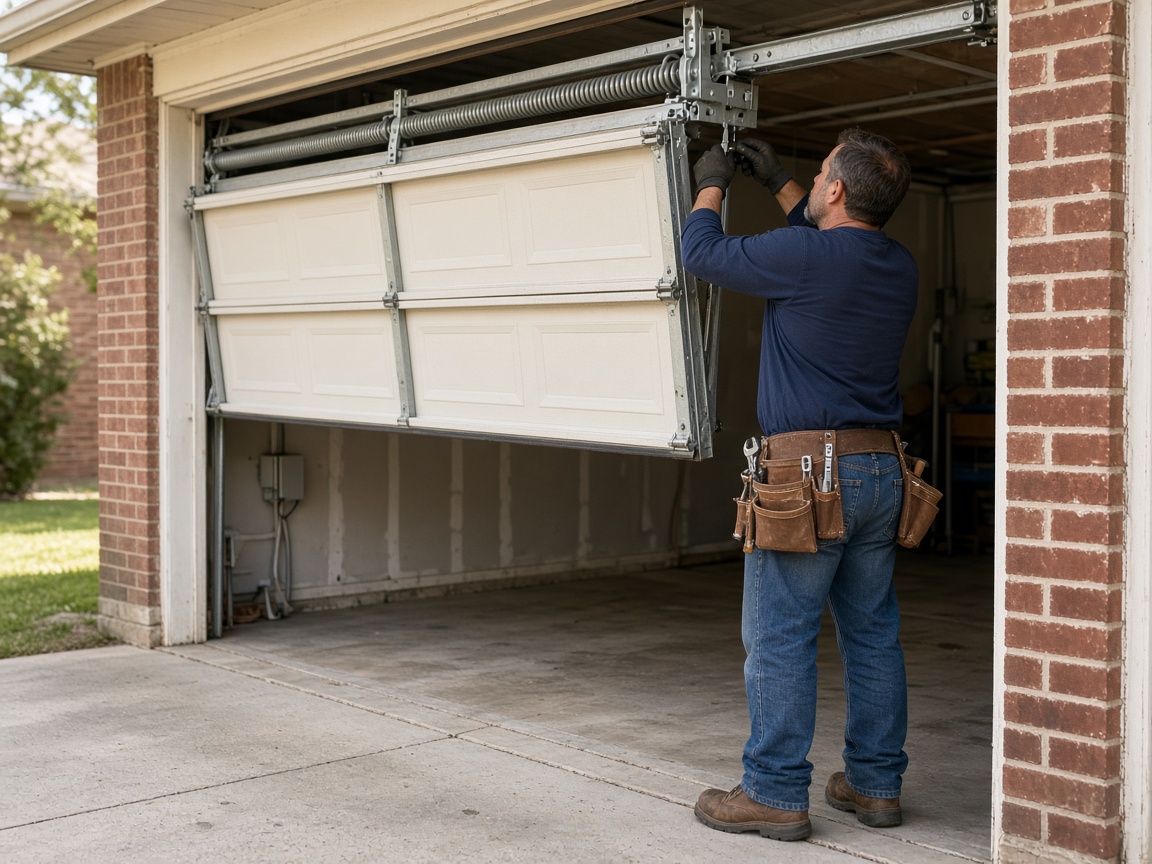
Garage Door Repair in Garland, Texas, starts with an honest look at what is actually wrong with your door. A door that rattles, stops halfway, or sits crooked on its track usually has one clear cause, and it is rarely the one you guess first. We work on residential doors across Garland, from older ranch homes near Firewheel to newer builds off Shiloh Road. Every visit begins with an inspection of the springs, cables, rollers, and opener before anything gets touched.
Why Choose Us in Garland
Homeowners in Garland have every reason to be cautious about who works on a garage door, because a spring under tension can injure someone who handles it carelessly. We take that seriously. Our approach is built around what you can see and verify yourself. We inspect the whole door system before recommending anything, and we put our findings in writing so you can read them, compare them, and ask questions before a single part is ordered or removed.
You will not be pushed into decisions on the driveway. If a roller is worn but the spring is still sound, we will tell you that and explain why the roller can wait or cannot. If a cable has frayed at the drum, we will show you the strand and explain how it failed. We believe a repair should make sense to the person paying for it, and the way to earn that is to show the evidence plainly.
We also stand behind workmanship you can inspect yourself. After a repair, we walk you through the old parts next to the new ones, so you can see the difference in wear, finish, and fit. We check balance, track alignment, and safety reversal before we leave, and we explain what each check means in plain language. Our goal is a door that works, and a homeowner who understands why it works.
Why Garage Door Repair Matters Now in Garland
Garland's climate is hard on garage doors in ways that are easy to miss. Triple-digit afternoons in July and August bake the metal and the garage air, which softens lubricant, dries out rubber seals, and stresses springs that have been cycling for years. A door that opened smoothly in spring can start to drag by midsummer, and many homeowners blame the opener when the real problem is a spring that has lost tension.
The clay soil under much of Garland also moves with the seasons. As the ground swells after heavy rain and shrinks during dry spells, slabs can shift slightly, and that movement can pull a track out of square. When a track goes out of alignment, rollers bind, the door pulls harder on one side, and cables take uneven loads. Catching that early keeps a simple adjustment from turning into a cable or drum replacement.
Many homes in the older neighborhoods of Garland still have their original springs, which were rated for a set number of cycles and have now been working for decades. Springs do not usually give warning before they fail. A hairline crack in a coil or a slight stretch in an extension spring can go unnoticed until the day the door will not lift. Scheduling an inspection now, before the next heat wave or the first cold snap, is a far better plan than waiting for a broken spring to decide the timing for you.
How We Do Repair Work Properly
Every repair follows the same sequence, because skipping steps is where problems start. First, we inspect the door, springs, cables, drums, rollers, hinges, and opener, and we note the condition of each. We check whether the door is balanced by disconnecting the opener and lifting the door by hand, since a door that does not hold mid-travel tells us a great deal about tension.
Second, we write up our findings and explain them before any work begins. You will see what is failing, what is wearing but still serviceable, and what can wait. We describe the options in plain terms so you can decide what makes sense for your home.
Third, we walk through the parts. We show you the old spring, cable, or roller beside its replacement, pointing out the wear, the finish, and the fit. This step lets you verify the work with your own eyes.
Fourth, we complete the repair with careful attention to tension, alignment, and cable routing. Finally, we test the door through several full cycles, confirm the safety reversal, and explain what we checked before we leave.
A Garland Repair Scenario
Consider a common situation on a quiet street in Garland, where a family with a two-car garage comes home one weekday evening to find their door stuck about two feet off the ground. The opener hums, the motor runs, but the door will not move. The homeowner had noticed a loud bang earlier that week and assumed the opener was failing. Calling for help was the right move, but the next step is where many people go wrong, because the first instinct is often to replace the opener.
When we arrived, the inspection started at the top of the door rather than the motor. One torsion spring had snapped cleanly across the middle, and the second spring was showing stretched coils and early fatigue on one side. The cables were intact, but the drum on the broken side had shifted slightly. We did not touch anything until we had explained these findings in writing, including why the opener was not at fault and why the second spring should be replaced at the same time rather than later.
Before starting the replacement, we laid the old broken spring beside the new one and showed the homeowner the fracture, the difference in coil thickness, and the wear on the drum. We then replaced both springs, checked the balance by hand, re-tensioned the system, and confirmed the drum and cables seated correctly. We tested the door through several full cycles and confirmed the safety reversal before handing it back.
The door now lifts evenly, and the homeowner understood every step because each one was explained before it happened. The opener, which had been blamed, was never the problem, and it kept running without the extra strain a failing spring would have put on it.
Garage Door Parts and Terms Garland Homeowners Ask About
Torsion Springs and Why They Fail Under Load
Torsion springs mount on a steel shaft above the door opening and wind up tension to lift the door. Most residential doors in Garland use this system, and it is the source of most spring-related failures. Springs are rated for a set number of cycles, and each open and close counts toward that total. When a torsion spring snaps, the door often drops suddenly, and the opener may be damaged if it keeps trying to lift a door that no longer has balance.
Several points matter when evaluating torsion springs. Check the coils for gaps, rust, or stretching along the length. Look for a spring that is noticeably longer on one side than the other, which suggests uneven fatigue. Watch for a door that drifts or slams when lifted halfway, since that often signals lost tension. Finally, never attempt to wind or unwind a torsion spring without the proper tools and training, because the stored energy can cause serious injury.
Extension Springs, Cables, and Safety
Extension springs run along the horizontal tracks on each side of the door and stretch as the door opens. They are common on older doors and lighter residential doors. Because they sit close to the floor and the track, a failed extension spring can release tension without much warning, and the cable can whip if it is not properly controlled.
Four things are worth knowing about this system. Safety cables should be installed through the spring, and they stop the spring from flying loose if it breaks. Cables should be inspected for fraying, kinks, or rust, especially near the drum. Springs should be matched in pairs, since replacing only one often leaves the other fatigued and ready to fail. Finally, tension should be set carefully, because an incorrectly adjusted extension spring can make the door heavy, uneven, or unsafe.
Rollers, Tracks, and Hinges in Older Garland Homes
Rollers, tracks, and hinges are the quieter parts of the system, but they carry the weight of the door on every cycle. In older homes around Garland, nylon rollers often become brittle or develop flat spots, while steel tracks can bend slightly from a past impact or shift from ground movement. Hinges can loosen or crack where they attach to the door panels.
Four checks help catch these issues early. Look for rollers that squeak, wobble, or sit at an angle when the door is down. Check the track for gaps, bends, or loose bolts at the wall brackets. Inspect hinge plates for cracks or rust around the screw holes. Finally, confirm the door sits level in the track, because a track out of plumb often causes binding that looks like a motor problem.
Frequently Asked Questions and Next Step
Garage door problems often start small and grow quickly, especially in the heat and soil conditions common in Garland. A single inspection can separate what needs attention now from what can wait, and you will have the findings in writing before we begin any work. If your door is stuck, noisy, uneven, or making a sound you have not heard before, the best next step is to schedule an inspection so the problem is identified properly and explained clearly. We will show you the parts involved, walk you through the options, and let you decide with full information in hand.
Garage Door Repair Next Steps in Garland
If your door needs attention, reach out to schedule an inspection. Bring any notes about when the problem started, what sounds you heard, and whether the door moved unevenly or stopped partway. That information helps us focus the inspection and make sure we understand your home's specific situation from the first visit.
Technician insight
In Garland, the thing that catches most people out with garage door repair is assuming the opener has failed when the real problem is a tired spring. Summer afternoons here push garage temperatures high enough to soften lubricant and stress coils that have been cycling for years. We always check spring balance by hand before we touch the opener, because a door that will not hold mid-travel tells us more than the motor does.
Snapped Torsion Spring on a Garland Two-Car Garage
A homeowner found the door stuck two feet off the ground after a loud bang, and assumed the opener had failed. Our inspection found one torsion spring snapped across the middle and the second spring showing early fatigue, with the drum on the broken side slightly shifted. We explained these findings in writing, showed the old and new springs side by side, replaced both springs, and rebalanced the door before testing several full cycles. The door now lifts evenly, and the opener was never the problem.
Garage Door Installation Services We Offer
✓Torsion Spring Replacement in Garland
Torsion springs are the most common lifting system on Garland garage doors, and they wear out after thousands of cycles. We inspect both springs, compare their wear, and show you the old and new parts side by side before replacement. Replacing springs in matched sets keeps the door balanced and protects the opener.
✓Extension Spring Replacement in Garland
Extension springs run along the horizontal tracks and are common on older and lighter residential doors. We inspect the springs, cables, and safety cables, and we explain our findings in writing before any work starts. Each replacement is set to correct tension and tested through several full cycles.
✓Broken Spring Repair in Garland
A broken spring can leave a door stuck, uneven, or dropping suddenly, so the inspection focuses on the whole system rather than only the snapped part. We check the remaining spring, drums, cables, and track alignment before repairing anything. You will see the failed spring and its replacement in hand before we complete the work.
How it works
- 1
Inspect the Full Door System
We check the springs, cables, drums, rollers, hinges, track, and opener, and we test balance by hand. Each part is noted for condition so nothing is assumed.
- 2
Explain Findings in Writing
Before any work begins, we give you a written summary of what is failing, what is wearing, and what can wait. You can read it, compare options, and ask questions at your own pace.
- 3
Walk Through Old and New Parts
We show you the old spring, cable, or roller next to its replacement, pointing out wear, finish, and fit. This gives you a clear view of what was changed and why.
- 4
Complete the Repair and Test
We set tension and alignment carefully, route cables correctly, and test the door through several full cycles. We confirm the safety reversal and explain what we checked before we leave.
Pricing
The scope is confirmed in writing after inspection, before any work begins, so you know exactly what is being done and why.