2026-11-27 ·
Can You Fix a Garage Door That Won't Close? A Troubleshooting Guide for Garland Homeowners
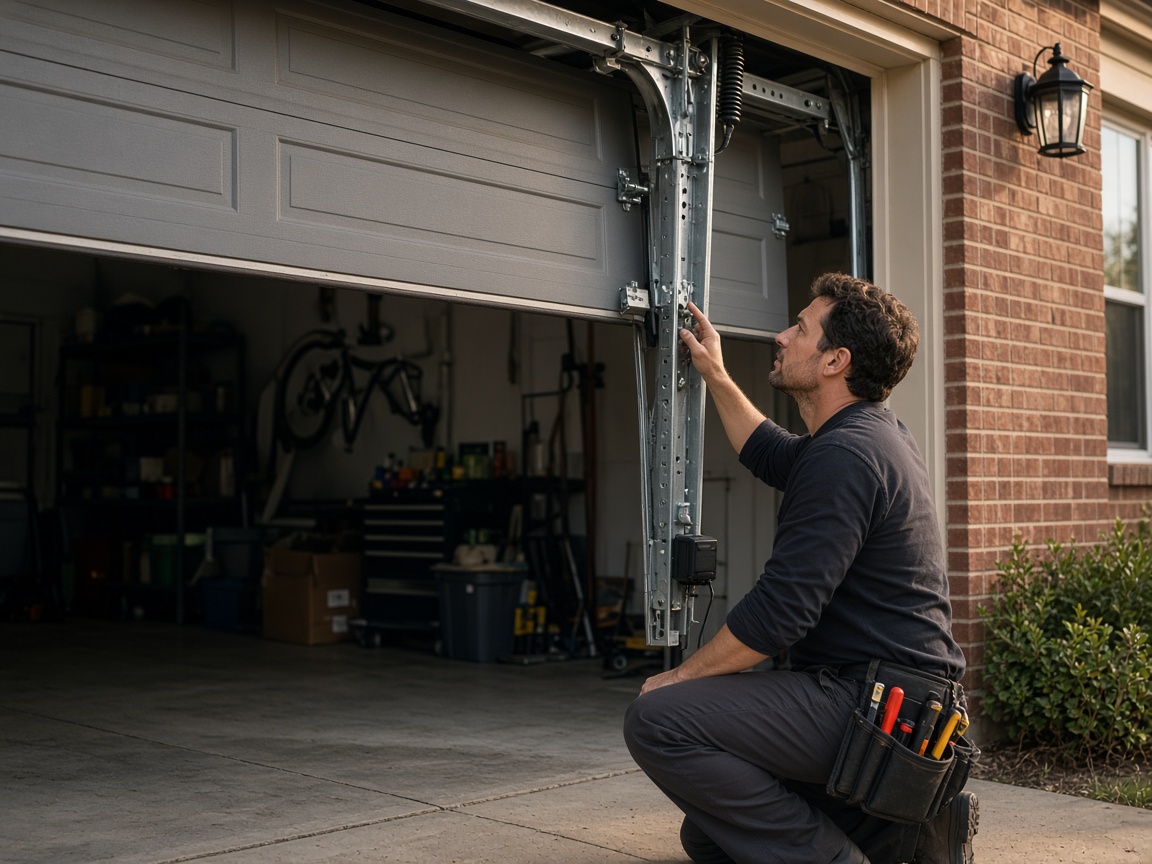
Yes, in most cases you can fix a garage door that won't close, and the fix is often simpler than it looks. A door that closes partway, reverses as soon as it touches the floor, or refuses to move at all usually points to one of a few causes: a blocked or misaligned safety sensor, a dead remote or wall button, an obstruction in the tracks, or a balance problem involving the springs or opener. Many of these can be checked in under 30 minutes with a flashlight, a stepladder, and some patience. The steps below follow the order that saves the most time, and they point out where a repair is better left to a professional.
Start With the Safety Sensors
Most residential doors have two photo-eye sensors mounted a few inches above the floor, one on each side of the opening. The opener uses them to confirm nothing is in the doorway before it closes. If the beam is interrupted or the sensors are out of alignment, the door will refuse to close or will close and then reverse. Look at the small indicator light on each sensor. A steady light on both usually means they see each other, while a blinking light or a dark sensor means they don't.
Next, look for anything blocking the beam. Cobwebs, dust, leaves, and paint overspray are common culprits. In Garland, direct afternoon sun can also wash out the sensor's receiver during warm months, so check whether the problem shows up only at certain times of day. If the sensors look clean, loosen the wing nut on each bracket and gently adjust the angle until the lights go steady. Also check the wire running to each sensor for chewed insulation or loose connections, which lawn equipment and pets sometimes cause.
Rule Out the Remote and Wall Button
Before you assume a mechanical fault, confirm that the opener is receiving a clean signal. Start with the wall button, since it bypasses the remote entirely. If the wall button closes the door, the problem is with the remote, usually a weak battery or a unit that has lost its programming. Replace the battery first and try again. If the remote still fails, follow your opener manual's instructions for reprogramming it.
If the wall button also fails, the issue is more likely in the opener itself or in a stuck switch. Check that the button is not pressed in, sticking, or damaged. Many openers also have a lock feature that disables remote and wall control, and it is easy to activate by accident. Look for a lock indicator on the opener or the wall panel. If the opener's status light blinks in a pattern while you press the button, the manual will usually list what that pattern means, which can save you a lot of guessing.
Clear Obstructions and Inspect the Tracks
With the power disconnected and the door closed, inspect the full length of both vertical tracks. Look for bent sections, loose mounting bolts, and rollers that have jumped out of the track. A roller that has popped out will cause the door to bind or sit crooked, and the opener may stop or reverse as a result. Gently guide the roller back into the track by hand, and never force a door that is catching or stuck.
Also clear the area around the door. Boxes, bicycles, and stored items placed close to the bottom of the door can interfere with its travel. Check the bottom weather seal, too, because a seal that has torn or curled can catch on the floor. Texas heat is hard on hardware. During the hottest stretches, metal tracks expand slightly and rollers can bind, which is why a door that closed easily in spring may struggle in August. Our article on why your garage door struggles during Dallas summers covers those seasonal causes in more detail.
Test the Door Balance
A properly balanced door should stay in place when you lift it by hand. To test this, close the door fully, pull the red emergency release cord to disconnect the opener, and lift the door slowly to about waist height. If it stays there without drifting up or slamming down, the balance is good. If it drops quickly, the springs may be too weak to counter the door's weight. If it rises on its own, the springs may be overpowering it.
Be careful during this test. The springs hold a great deal of stored energy, and a door that is not properly supported can fall with force. Never stand directly under the door during the test, and never attempt to adjust or remove springs yourself. An unbalanced door is often the reason an opener strains to close the door or reverses once it meets resistance. Replacing worn components is safer when handled by someone with the right tools and training, and our garage door spring repair and replacement service covers that work.
Recognize Spring and Opener Warning Signs
Some symptoms tell you the problem has moved beyond simple troubleshooting. Pay attention if you notice any of the following:
- A loud bang from the garage, often followed by the door sagging or refusing to open
- A visible gap or stretched section in a torsion or extension spring
- A door that closes unevenly, with one side lower than the other
- An opener that hums, strains, or runs without moving the door
- A burning smell or a motor that stops intermittently
These signs often point to worn springs, damaged cables, or an opener that is no longer getting the power or force it needs. Garland's large temperature swings can speed up wear on springs and openers over time, so an inspection after a long run of hot or cold weather is a reasonable habit. If you're unsure whether the opener or the springs are the root cause, garage door opener repair can help you narrow it down.
Know When to Stop and Call a Professional
Some garage door problems are unsafe to handle yourself, and knowing where to stop is part of troubleshooting. Stop immediately if a spring is broken, a cable is frayed or has come off its drum, a track is badly bent, or the door falls when you try to lift it. These situations involve heavy components under tension, and attempting repairs without the right equipment can cause serious injury. Do not try to force a stuck door open or closed while the opener is still connected.
If the door is stuck in a partly open position and cannot be safely secured, or if you're dealing with a problem after normal business hours, emergency garage door repair is the right next step. Keep the door closed, keep vehicles and people clear of the opening, and avoid any repair that requires lifting the door or working on springs until a trained technician has assessed it. Most closing problems have simple answers, but knowing when a problem has crossed into professional territory is what keeps the repair safe.